01 / Business problem
Why this product exists.
A QR code that opens raw API data is not a usable guest experience. Once a payment is introduced, the system also needs a defensible way to verify settlement and account for each share.
QR tipping and settlement · Work in progress
Work in progress · hosted sign-in verified; money movement not exercised
Splitcore is a product for venues and entertainers: guests can reach a human-facing tipping experience from a QR code while venue teams have a separate management surface. The public repositories contain a Next.js frontend and a NestJS backend with payment, webhook, ledger and payout modules.
Guests who want to tip; venue teams managing entertainers, QR codes and split rules.
These are the product roles described by the repositories, not verified customers, venues or adoption.Work in progress · hosted sign-in verified; money movement not exercised
Next.js App RouterNestJSTypeScriptPrisma / PostgreSQLRedis / BullMQPaystack provider interface
01 / Business problem
A QR code that opens raw API data is not a usable guest experience. Once a payment is introduced, the system also needs a defensible way to verify settlement and account for each share.
02 / Product objective
Separate the guest-facing QR route from the venue dashboard and keep payment verification, split calculations and ledger posting on explicit backend paths.
03 / Solution architecture
Module boundaries and data paths observed in source; this is not a live deployment diagram.
Guest and venue surfaces in a server-rendered Next.js frontend
NestJS API with role-scoped routes
Prisma/PostgreSQL persistence and immutable ledger entries
Redis/BullMQ for asynchronous webhook and payout work
04 / Engineering decisions
These notes describe the implementation found in the repositories—not measured product outcomes.
The ledger uses positive integer kobo, validates split basis points, and checks that debits equal credits before returning a posting.
The settlement service re-verifies payment status, amount, currency and the stored split snapshot; a single database transaction conditionally claims settlement and writes ledger and payout obligations.
Webhook payloads are not treated as payment truth: stored events route into settlement, which verifies with the provider. Duplicate or concurrent settlement attempts do not double-post.
05 / Selected implementation
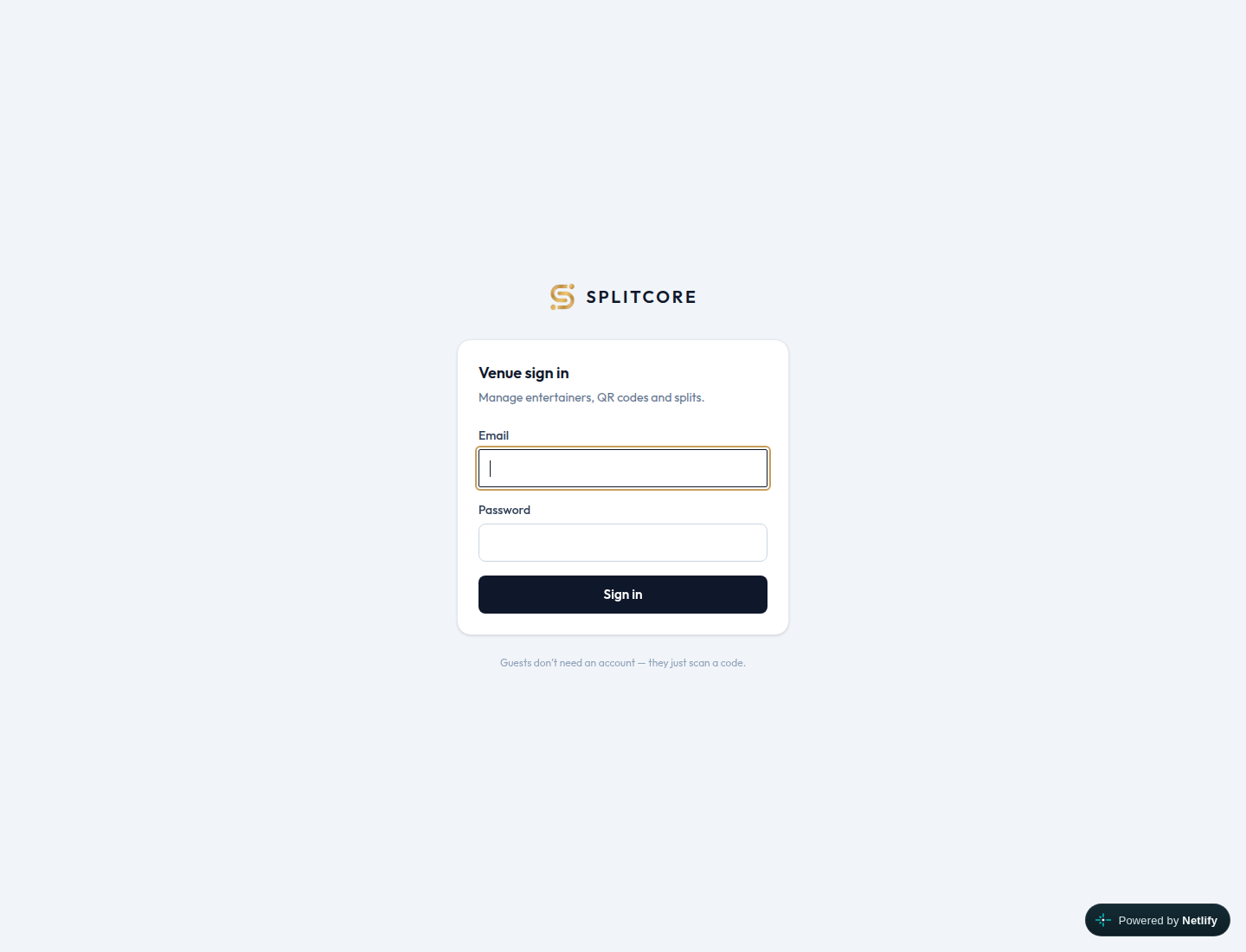
The source separates pure ledger calculation from persistence and payment-provider access. The hosted frontend currently exposes a venue sign-in screen; the private dashboard, guest QR flow and payment paths were not exercised during this review.
06 / Current status and limits
07 / Potential improvements
A useful next conversation
Bring the situation, not a finished technical brief.
Discuss a project